Starting a new business is exciting, but creating a brand that people remember takes more than choosing a business name and designing a logo.
A strong Professional brand identity gives your business a clear personality. It helps customers understand who you are, what you offer, and why they should choose you instead of another company.
Your brand identity includes your logo, colors, typography, messaging, visual style, brand voice, and other elements that shape how people experience your business. Canva also describes Professional brand identity as a combination of visual and symbolic elements such as a name, logo, color scheme, typography, and design elements.
If you are wondering how to build a Professional brand identity for a startup, the best approach is to start with strategy and then turn that strategy into a consistent visual and verbal identity.
What Is a Brand Identity?
Brand identity is the way your business presents itself to customers.
It includes everything you intentionally create to communicate your company’s personality and values.
Important Professional brand identity elements include:
- Brand name
- Logo
- Color palette
- Typography
- Brand voice
- Brand messaging
- Brand story
- Photography and imagery
- Graphic design style
- Brand guidelines
Brand identity is different from brand image. Your identity is what your business creates and controls, while your brand image is how customers actually perceive you.
For a startup, creating this identity early can make marketing easier because your website, social media, advertising, presentations, and other materials can follow the same visual and communication style.
Why Brand Identity Matters for a New Startup
A startup often competes against businesses that already have recognition and customer trust.
A professional identity can help you look established while communicating what makes your company different.
A strong Professional brand identity can help you:
- Build recognition
- Create a professional first impression
- Communicate your values
- Stand apart from competitors
- Create customer trust
- Keep marketing consistent
- Give your team clear design direction
- Build a foundation for future growth
Brand consistency is especially important because customers interact with businesses across many touchpoints, including websites, social media, emails, advertisements, and printed materials. Canva recommends maintaining consistent visual identity, voice, messaging, templates, and channel presentation.
1. Define Your Startup’s Purpose
Before designing anything, determine why your startup exists.
Ask yourself:
What problem does the business solve?
Who does it help?
What makes the product or service useful?
What does the company want to achieve?
What values guide the business?
Your answers become the foundation of your brand strategy.
For example, a technology startup may want to communicate innovation, simplicity, and reliability. A sustainable clothing company may focus on responsible production, quality, and environmental awareness.
Your visual identity should support these ideas rather than being created separately from them.
2. Identify Your Target Audience
A brand cannot effectively communicate with everyone.
You need to understand the people most likely to buy from you.
Research your target audience by considering:
- Age and location
- Buying habits
- Problems and needs
- Interests
- Expectations
- Budget
- Competitors they already use
- Reasons they choose one company over another
Your audience should influence your brand personality and design decisions.
Canva recommends understanding your customers and competitors before developing the main components of a Professional brand identity.
3. Research Your Competitors
Look at businesses competing in your market.
Study their:
- Logos
- Colors
- Websites
- Social media
- Messaging
- Typography
- Product presentation
- Customer experience
The goal is not to copy competitors.
Instead, identify common patterns and opportunities to look different.
If every competitor uses dark blue and corporate photography, for example, you might find an opportunity for a cleaner or more approachable visual direction.
Your brand should fit your industry while still having a recognizable personality.
4. Define Your Brand Positioning
Brand positioning explains where your business belongs in the market and why customers should choose it.
Create a simple positioning statement that answers:
Who are we?
Who do we serve?
What problem do we solve?
What makes us different?
What value do we provide?
This statement can guide your logo, website, content, advertising, and sales messaging.
A clear brand strategy helps businesses differentiate themselves and make branding decisions that support long term goals.
5. Choose Your Brand Personality
Think about your startup as if it were a person.
Would it be:
Professional?
Friendly?
Bold?
Modern?
Creative?
Reliable?
Playful?
Premium?
Simple?
Your personality should match both your audience and your business.
For example, a financial technology startup may use a professional and trustworthy personality, while a children’s education brand may use a friendly and energetic personality.
Once you choose your personality, use it consistently in your designs and communication.
6. Create a Memorable Logo
Your logo is one of the most visible parts of your startup Professional brand identity.
A good logo should be:
- Simple
- Recognizable
- Relevant to the business
- Easy to use at different sizes
- Appropriate for digital and print
- Distinct from competitors
Avoid adding too many details just because they look interesting.
Your logo should work on your website, social media profile, business card, presentation, packaging, and other marketing materials.
For startups that need a custom visual foundation, Inovative Logo’s Logo Design Services offers custom logo development and complete Professional brand identity packages. The service page also highlights best logo redesign, Professional brand identity packages, and final files for different uses.
7. Select Your Brand Colors
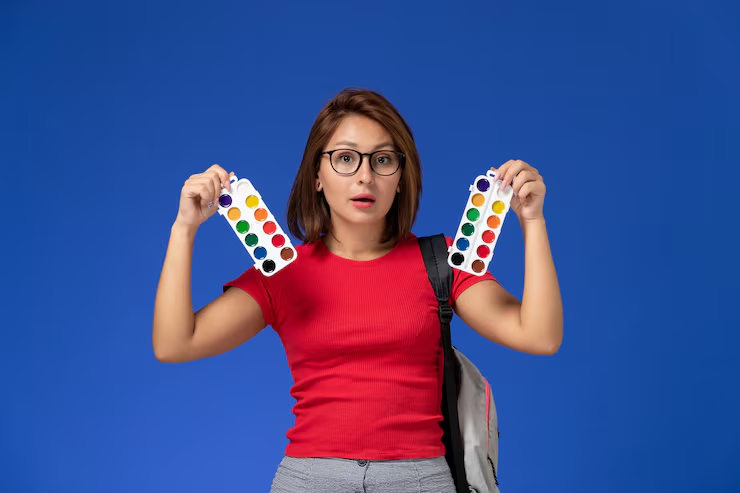
Colors can become an important recognition tool for your business.
Choose a primary color palette and supporting colors that reflect your brand personality.
For example:
Blue can communicate reliability and professionalism.
Green is often associated with nature, growth, or sustainability.
Orange can create an energetic and approachable feeling.
Black can support a premium or sophisticated visual direction.
Do not choose colors only because they look attractive. Think about how they work with your audience, industry, logo, website, and marketing materials.
Your colors should also remain readable and practical across different backgrounds and formats.
8. Choose Brand Typography
Typography is another important part of visual identity.
Select fonts that match your brand personality and remain easy to read.
A startup may use one font for headings and another for body content, but the combination should feel consistent.
Consider typography across:
Website pages
Social media graphics
Presentations
Business cards
Emails
Advertisements
Packaging
Your font choices should support the same personality established by your logo and color palette.
9. Develop Your Brand Voice and Messaging
Brand identity is not only visual.
Your words also communicate who you are.
Define how your startup should sound when speaking to customers.
Your brand voice could be:
Professional and informative
Friendly and conversational
Confident and direct
Creative and energetic
Calm and helpful
Then establish basic messaging for your business.
Create a clear explanation of:
What you do
Who you help
What problem you solve
Why customers should trust you
What makes your solution different
A consistent brand voice helps customers receive the same impression whether they read your website, social media posts, emails, or advertisements.
10. Create a Brand Story
People want to understand why a business exists.
Your brand story can explain the problem that inspired your startup, the purpose behind the company, and the future you want to create.
Keep the story simple and honest.
A useful brand story should communicate:
The problem
The motivation
The solution
The mission
The future vision
Your story should support your positioning instead of becoming a long company history.
11. Build a Consistent Visual Style
Once your logo, colors, typography, imagery, and messaging are ready, combine them into one visual system.
Decide how your brand should look across:
Website
Social media
Email marketing
Presentations
Business cards
Advertising
Brochures
Product packaging
Sales materials
For startups, this step prevents every marketing asset from looking like it came from a different company.
Inovative Logo’s Creative Designing Services can support the creation of consistent visual materials across different business needs.
12. Create Brand Guidelines
A brand style guide turns your branding decisions into clear rules.
Your guidelines should explain:
- How to use the logo
- Approved logo variations
- Brand colors
- Font choices
- Typography hierarchy
- Photography style
- Graphic elements
- Brand voice
- Messaging principles
- Examples of correct and incorrect usage
This becomes especially useful when your startup grows and more people begin creating marketing content.
Canva notes that brand kits and guidelines help teams maintain consistency and make approved fonts, colors, images, and other assets easier to use.
13. Apply Your Brand to Your Website
Your website should be one of the strongest expressions of your Professional brand identity.
Use the same logo, colors, typography, imagery, messaging, and personality across the site.
Your homepage should quickly communicate:
Who you are
What you offer
Who you serve
Why your business is different
What visitors should do next
The website should not look like a separate project from your branding.
For startups building their online presence, Inovative Logo’s Best Website Development Services can connect the Professional brand identity with the website experience.
14. Build Your Social Media Branding
Your social media profiles should look like part of the same company.
Use consistent:
Profile images
Cover images
Colors
Fonts
Post layouts
Photography
Graphic elements
Writing style
You can still adapt designs for different platforms, but the core brand should remain recognizable.
This makes it easier for people to connect social media content with your business.
15. Review Your Brand Before Launch
Before launching your startup, review the complete Professional brand identity.
Ask:
Does the logo fit the business?
Are the colors consistent?
Is the typography readable?
Does the brand appeal to the target audience?
Is the messaging clear?
Does the website match the brand?
Do social profiles look consistent?
Does the identity look different from competitors?
Can another designer understand the brand guidelines?
If the answer is yes, your startup has a much stronger foundation for launch.
Common Startup Branding Mistakes to Avoid
Many new businesses make branding harder than it needs to be.
Avoid these mistakes:
Designing Only a Logo
A logo is important, but it is only one part of a complete Professional brand identity.
Copying Competitors
Research competitors, but create your own visual and verbal identity.
Changing Design Too Often
Constantly changing colors, fonts, or logos can make your startup difficult to recognize.
Ignoring Brand Voice
Your written communication should match your visual identity.
Skipping Brand Guidelines
Without clear guidelines, your branding can become inconsistent as the business grows.
Designing Without Audience Research
A design can look attractive but still fail to connect with the right customers.
How Much Does Startup Branding Cost?
Startup branding costs vary based on the number of services required.
A basic project may focus on logo design, while a complete startup branding project can include:
Logo design
Brand strategy
Color palette
Typography
Brand messaging
Brand guidelines
Social media assets
Business stationery
Website design
Marketing materials
The important question is not simply how much branding costs. Consider what your startup actually needs to launch professionally and remain consistent as it grows.
Final Startup Brand Identity Checklist
Before launching, make sure you have:
- Clear brand purpose
- Defined target audience
- Competitor research
- Brand positioning
- Brand personality
- Professional logo
- Color palette
- Typography system
- Brand voice
- Core messaging
- Brand story
- Visual style
- Brand guidelines
- Website branding
- Social media branding
FAQs
What is the most important part of a startup brand identity?
There is no single element that creates a strong brand. Your strategy, logo, colors, typography, messaging, voice, and customer experience should work together.
Can I build a brand identity without a professional designer?
Yes. A small startup can create basic branding internally. However, professional branding can help create a more consistent and strategic identity, especially when the business plans to compete in a crowded market.
Should a startup create brand guidelines?
Yes. Even a small startup can benefit from simple brand guidelines. They make it easier to keep your website, social media, advertising, and other marketing materials consistent.
Is a logo the same as a brand identity?
No. A logo is one part of a brand identity. A complete identity also includes colors, typography, imagery, messaging, voice, and other elements that communicate the personality of the business.
When should a startup create its brand identity?
Ideally, develop your core identity before launching major marketing campaigns. Your brand identity should be clear enough to guide your website, social media, sales materials, and customer communications from the beginning.
Conclusion
Learning how to build a Professional brand identity for a startup starts with understanding that branding is more than visual design.
Begin with your purpose, audience, positioning, and personality. Then develop your logo, colors, typography, voice, messaging, imagery, and brand guidelines around those decisions.
Most importantly, stay consistent.
A strong startup brand identity gives your business a clear foundation for its website, social media, marketing, sales, and future growth. When every customer interaction feels connected, your startup becomes easier to recognize, understand, and remember.
For startups that need help bringing these elements together, Inovative Logo provides Best logo design, Professional brand identity, Proven creative design, and Best website development services for businesses building their visual presence. The company’s current service menu includes dedicated logo design and brand identity offerings, while its brand identity service specifically covers startups creating their first identity.