

Launching a new business involves much more than choosing a name and creating a logo.
Before your first customer sees your company, you need to decide what your business stands for, who you want to reach, how you want to look, and how you want to communicate.
That is where a brand development checklist becomes useful.
A clear checklist helps you build your brand in the right order instead of making random design decisions. Adobe recommends defining your purpose, audience, competitors, brand assets, story, and style guide as key parts of developing a small business brand identity.
This guide covers the complete brand development process for a new business, from strategy and positioning to logo design, brand guidelines, website branding, and launch.
What Is Brand Development?
Brand development is the process of creating and improving the way a business is presented and understood by its target audience.
It includes both strategy and creative work.
A complete brand development process can involve:
- Brand purpose
- Target audience
- Market research
- Competitor research
- Brand positioning
- Brand personality
- Brand messaging
- Brand voice
- Brand story
- Logo design
- Colors
- Typography
- Visual identity
- Brand guidelines
- Website and marketing assets
Canva describes brand building as connecting who a business is with its audience through its identity, communications, values, and story.
Complete Brand Development Checklist
Use the following checklist before launching your new business.
1. Define Your Brand Purpose
Your brand purpose explains why your business exists beyond simply making money.
Ask yourself:
What problem does the business solve?
Who does it help?
Why did you start the company?
What change do you want to create?
What value do you provide?
A clear purpose gives direction to your branding and marketing.
Checklist
□ Define your purpose
□ Identify the problem you solve
□ Explain your main value
□ Write a simple purpose statement
2. Define Your Mission and Vision
Your mission explains what your business does today.
Your vision explains where you want the business to go.
For example:
Mission: Help small businesses create professional online experiences.
Vision: Become a trusted digital partner for growing businesses.
Keep both statements simple enough for your team and customers to understand.
Checklist
□ Write your mission
□ Write your vision
□ Make both statements easy to understand
□ Make sure they match your business goals
3. Establish Your Brand Values
Brand values guide how your company behaves and makes decisions.
Common examples include:
- Trust
- Innovation
- Quality
- Simplicity
- Transparency
- Customer focus
- Creativity
- Sustainability
Choose values that your business can actually demonstrate.
Do not choose impressive sounding words simply because they look good on a website.
Checklist
□ Choose three to five core values
□ Define what each value means
□ Make sure your team understands them
□ Connect values to customer experience
4. Research Your Target Audience
Your brand should be built around the people you want to serve.
Research:
- Age
- Location
- Needs
- Problems
- Buying behavior
- Preferences
- Expectations
- Competitors they already use
Adobe recommends understanding audience needs, habits, pain points, and motivations when developing a small business brand identity.
Checklist
□ Define your ideal customer
□ Identify their main problems
□ Understand their buying decisions
□ Identify what they value
□ Understand how they describe their needs
5. Research Your Competitors
Before creating your visual identity, understand the market.
Review competitor:
Logo designs
Colors
Typography
Websites
Social media
Messaging
Offers
Customer experience
The goal is not to copy competitors.
The goal is to understand what already exists and identify opportunities to position your business differently.
Checklist
□ Identify five to ten competitors
□ Review their visual identity
□ Study their messaging
□ Compare their offers
□ Identify market gaps
□ Find ways to differentiate your brand
6. Choose Your Brand Positioning
Brand positioning explains how you want customers to understand your business compared with competitors.
Answer four questions:
Who do we serve?
What do we offer?
What makes us different?
Why should customers choose us?
Your positioning should influence your messaging, design, website, and marketing.
Checklist
□ Define your target market
□ Identify your main advantage
□ Define your competitive difference
□ Write a simple positioning statement
7. Choose Your Brand Personality
Your brand personality describes how your company should feel to customers.
You might want your business to appear:
Professional
Friendly
Modern
Creative
Bold
Trustworthy
Premium
Simple
Approachable
Choose a few traits rather than trying to represent everything.
Checklist
□ Choose three to five personality traits
□ Define how your brand should sound
□ Define how your brand should look
□ Make sure personality matches your audience
8. Create Your Brand Name and Tagline
Your name is one of the most important parts of your brand.
Before finalizing it, check:
- Availability
- Spelling
- Pronunciation
- Meaning
- Competitor similarity
- Domain availability
- Social media availability
- Trademark considerations
Your tagline should communicate a useful idea rather than simply sound clever.
Checklist
□ Finalize business name
□ Check competitors
□ Check domain availability
□ Check social handles
□ Research trademark availability
□ Create a tagline if needed
9. Develop Your Brand Messaging
Your messaging explains what your business offers and why it matters.
Create clear answers for:
What do you offer?
Who is it for?
What problem does it solve?
What makes it different?
What benefit does the customer receive?
Avoid vague statements such as “We provide the best solutions.”
Be specific about the value you provide.
Checklist
□ Create your main brand message
□ Write your value proposition
□ Define key customer benefits
□ Create supporting messages
□ Make messaging customer focused
10. Define Your Brand Voice
Your brand voice determines how your business communicates.
For example, your voice could be:
Clear
Friendly
Professional
Helpful
Confident
Your voice should remain recognizable across your website, emails, social media, advertisements, and sales materials.
Canva identifies voice, tone, messaging, story, and visual identity as important parts of a complete brand system.
Checklist
□ Choose three voice characteristics
□ Define words you should use
□ Define words you should avoid
□ Create sample messaging
□ Apply the voice across marketing channels
11. Create Your Brand Story
Your brand story explains how your business started, what problem inspired it, and what you want to accomplish.
A simple brand story can include:
- The problem
- The reason you started
- Your solution
- Your purpose
- Your future goal
Keep it honest and easy to understand.
Adobe also identifies brand storytelling as a useful way to communicate purpose and create stronger connections with an audience.
12. Design Your Logo
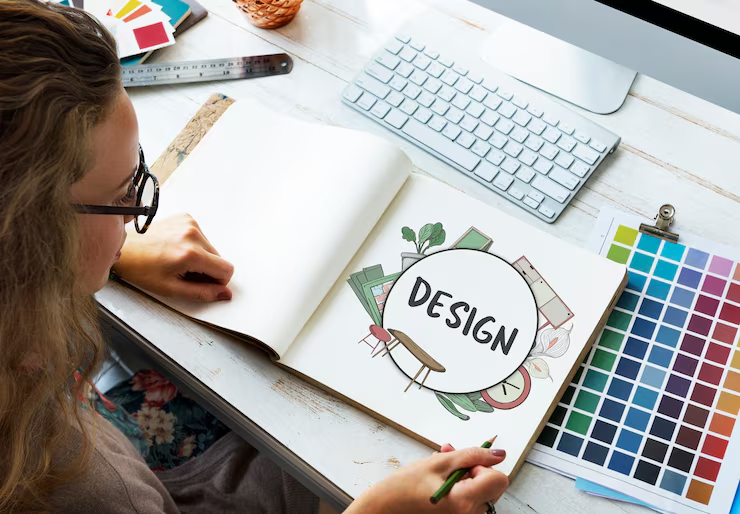
Your logo is one of the most visible elements of your brand identity.
A strong logo should be:
- Simple
- Recognizable
- Relevant
- Flexible
- Easy to read
- Suitable for digital and print use
For a new business, avoid designing a logo based only on current trends. Your identity should have enough flexibility to grow with the company.
For professional logo development, Inovative Logo’s Logo Design Services provides custom logo design and logo identity solutions.
Checklist
□ Primary logo
□ Secondary logo
□ Logo icon
□ Light and dark versions
□ Vector files
□ High resolution files
□ Web optimized files
□ Usage instructions
13. Build Your Visual Identity
Your visual identity goes beyond the logo.
It should define:
Color palette
Typography
Photography
Iconography
Graphic elements
Illustration style
Layout style
Social media design
Canva defines visual identity as including elements such as logos, colors, typography, photography, videos, icons, and other graphics.
Checklist
□ Primary colors
□ Supporting colors
□ Heading font
□ Body font
□ Image style
□ Icon style
□ Graphic elements
□ Layout direction
14. Create Brand Guidelines
Brand guidelines turn your branding decisions into practical rules.
They should explain how your brand should look and sound across different channels.
A useful brand guide can include:
- Brand purpose
- Mission
- Values
- Logo rules
- Color codes
- Typography
- Photography
- Brand voice
- Messaging
- Social media rules
- Website guidelines
- Examples of correct and incorrect usage
Canva describes brand guidelines as a rulebook for presenting a business consistently across channels and recommends covering both verbal and visual identity.
Checklist
□ Create brand guide
□ Document logo rules
□ Document colors
□ Document typography
□ Document voice
□ Add examples
□ Share guidelines with your team
15. Create Your Marketing Assets
Once your identity is ready, create the materials your business needs to launch.
Depending on your business, these may include:
Business cards
Letterheads
Brochures
Flyers
Social media templates
Presentation templates
Email graphics
Digital advertisements
Packaging
Sales materials
Inovative Logo’s Creative Designing Services can support the creation of professional marketing and visual materials that follow your brand identity.
16. Build Your Branded Website
Your website should look and sound like the same business represented by your logo and marketing materials.
Your website should include:
- Clear brand message
- Consistent logo
- Brand colors
- Brand typography
- Brand imagery
- Clear calls to action
- Consistent tone
- Trust signals
- Contact information
Adobe recommends keeping brand presentation consistent across websites, print, mobile, and other customer touchpoints.
For businesses that need a branded online presence, Inovative Logo’s Website Development Services can be considered as part of the launch process.
17. Set Up Social Media Branding
Before launching your social profiles, prepare consistent assets.
Checklist
□ Profile logo
□ Cover image
□ Bio description
□ Brand colors
□ Post templates
□ Story templates
□ Highlight covers
□ Brand voice
□ Content themes
You do not need to be active on every social platform. Focus on the channels where your target audience is most likely to spend time.
18. Prepare Your Brand Launch
A brand launch should be planned rather than rushed.
Prepare:
- Website
- Social profiles
- Email signature
- Marketing materials
- Business documents
- Sales presentations
- Product packaging if needed
- Launch announcement
- Customer communications
Make sure every customer facing asset follows the same brand rules.
19. Test Your Brand Before Launch
Before going public, ask people who match your target audience for feedback.
Ask:
Does the brand look professional?
What type of business does this appear to be?
Who do you think this brand is for?
What three words describe it?
Is the main message clear?
Does anything feel confusing?
Do not change the entire identity based on one person’s opinion. Look for repeated patterns in the feedback.
20. Create a Brand Management System
Brand development does not end when your business launches.
As your company grows, more people may create content and marketing materials.
Without clear rules, consistency can decline.
Canva recommends using brand guidelines and brand kits to help teams maintain a consistent identity as businesses grow.
Checklist
□ Store brand files in one location
□ Keep approved logos available
□ Store color codes
□ Store approved fonts
□ Maintain templates
□ Keep brand guidelines updated
□ Review new marketing materials
New Business Brand Launch Checklist
Here is a quick version you can save:
Strategy
□ Brand purpose
□ Mission
□ Vision
□ Values
□ Target audience
□ Competitor research
□ Brand positioning
□ Brand personality
Messaging
□ Value proposition
□ Brand message
□ Brand voice
□ Brand story
□ Tagline
Visual Identity
□ Logo
□ Logo variations
□ Color palette
□ Typography
□ Photography style
□ Graphic elements
□ Icon style
Brand Guidelines
□ Logo rules
□ Color rules
□ Typography rules
□ Voice and tone
□ Messaging rules
□ Social media guidelines
□ Usage examples
Marketing
□ Website
□ Social media profiles
□ Business cards
□ Email signature
□ Marketing templates
□ Sales materials
□ Advertising assets
Launch
□ Final brand review
□ Audience feedback
□ Website review
□ Social media review
□ Brand asset organization
□ Launch announcement
□ Ongoing brand monitoring
Common Brand Development Mistakes
Avoid these mistakes when launching your business:
Starting With Design
Do not create a logo before understanding your audience and positioning.
Copying Competitors
Research competitors, but develop your own identity.
Using Too Many Colors
A controlled palette is easier to recognize and manage.
Changing Your Brand Constantly
Give your identity time to build recognition.
Ignoring Brand Guidelines
Without clear rules, different team members may create inconsistent materials.
Trying to Appeal to Everyone
A focused brand usually communicates more clearly than a brand trying to please every possible customer.
When Should You Start Brand Development?
Ideally, start brand development before launching your main marketing activities.
Your brand identity should be ready before you invest heavily in:
Website development
Advertising
Social media campaigns
Printed materials
Packaging
Sales presentations
This prevents you from creating marketing assets and then redesigning them later.
FAQs
What should be included in a brand development checklist?
A complete checklist should cover brand strategy, audience research, competitor research, positioning, messaging, visual identity, logo design, brand guidelines, marketing assets, website branding, social media, and launch preparation.
How long does brand development take?
A simple startup identity can be developed relatively quickly, while a detailed brand development project involving research, strategy, messaging, visual identity, and multiple applications can take several weeks or longer.
Does a new business really need a brand identity?
Yes. A clear brand identity helps a new business communicate who it is, who it serves, and what makes it different. It also gives marketing activities a consistent visual and verbal direction.
What is the difference between brand development and logo design?
Logo design focuses mainly on creating the visual mark. Brand development is broader and can include strategy, positioning, messaging, visual identity, brand guidelines, marketing materials, and customer experience.
Can I develop my brand myself?
Yes. A small business can develop basic branding internally. However, professional help can be useful when you need a stronger strategy, custom visual identity, or a consistent system across multiple marketing channels.
Conclusion
A strong brand development checklist helps you build your new business in a clear and organized way.
Start with your purpose, audience, values, positioning, and personality. Then develop your messaging and visual identity. Create your logo, colors, typography, brand guidelines, website, social media assets, and marketing materials around the same strategy.
Do not think of branding as a one time design project.
Your brand should grow with your business. Review it as your audience, products, market, and goals change while keeping the core identity consistent.
For businesses that want professional support with the visual side of brand development, Inovative Logo offers logo design, brand identity, creative design, and website development services.
The most important goal is simple: build a brand that your customers can recognize, understand, trust, and remember.